
What Does KopiO Mean and Why the Term Still Matters Today
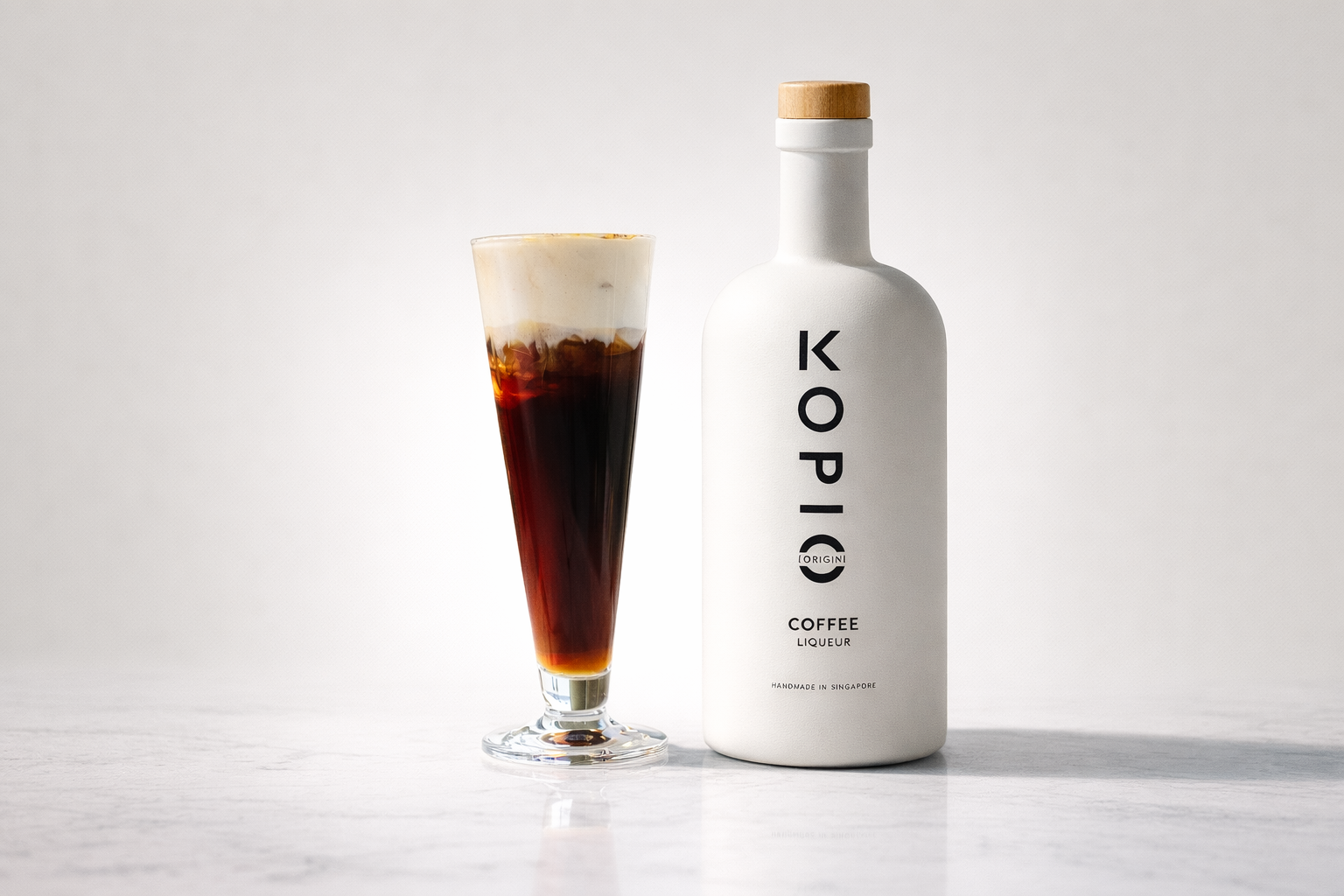
In Singapore, “kopi-O” isn’t just a coffee order. It’s a piece of everyday language that carries a very specific promise: black coffee, clear flavour, and a kind of honest intensity that doesn’t rely on milk to soften the edges. When someone says kopi-O, they’re describing a profile, not a trend. Strong, aromatic, straightforward, and (when it’s done well) surprisingly balanced.
That’s why the name matters when it’s carried into spirits. KopiO as a coffee liqueur isn’t trying to borrow culture for decoration. It’s borrowing a standard. The kopi-O standard is simple: coffee should taste like coffee, and the finish should feel intentional, not sticky or noisy. In the world of coffee liqueurs, where sweetness can easily become the main event, a name like KopiO sets expectations in the right direction from the first sip.
If you want the clearest “this is what we mean” reference point, start with the official introduction to the product on KopiO by Studio Origin. The positioning is straightforward: coffee-forward, built for real use, and designed to stay balanced in cocktails and desserts.
Where the Term Came From, and Why It Still Signals Quality
Kopi-O comes from kopi culture, where the ordering language is efficient because it has to be. You’re not ordering a concept, you’re ordering a cup. And because it’s practical, the meaning is consistent: kopi-O is black coffee. That makes it a useful benchmark, because black coffee is unforgiving. There’s nowhere to hide under milk foam, vanilla syrup, or heavy cream.
That same “nowhere to hide” idea is actually a great way to understand why the term still matters today. When a coffee liqueur is used properly (the way bars actually use it), it has to hold up under pressure:
It gets diluted by ice.
It gets paired with bitter espresso.
It gets stretched by dairy or plant milk.
It gets asked to coexist with base spirits that have their own strong personalities.
A coffee liqueur that only tastes good neat can fall apart fast in a working drink. A coffee liqueur built with the kopi-O mindset is made to stay coherent once it enters the real world.
How KopiO Translates Kopi-O Into Cocktails
The modern cocktail bar doesn’t just care about flavour. It cares about structure: how a drink opens, where it peaks, how it finishes, and whether the final impression is clean. This is exactly where KopiO feels especially “Singapore” in the best way: it’s direct, but not blunt. Pronounced coffee character, but not cloying.
A perfect example is the Espresso Martini. The drink is famous, but it’s also famously easy to get wrong if the coffee element becomes sugary or muddled. Studio Origin’s own breakdown, The Espresso Martini Done Properly, is useful because it frames the coffee liqueur not as a sweetener, but as part of the drink’s core architecture. That’s the kopi-O idea again: coffee first, balance always.
A Quick Reality Check: “Easy to Drink” Doesn’t Mean “Boring”
When people describe KopiO as “easy to drink,” they’re usually reacting to what it doesn’t do. It doesn’t flood your palate with sugar. It doesn’t turn every cocktail into a dessert. It doesn’t leave you with that heavy, syrupy finish that makes you feel like you need water immediately.
Instead, it’s approachable because it’s controlled. And that control is what makes it useful across different styles of service: from a hotel bar making a high-volume classic, to a small craft bar looking for clean flavour layering, to a home setup where you want the drink to taste right without a dozen adjustments.
The KopiO Pairing Break
If you want to see how KopiO behaves in a creamy classic (where sweetness can easily get out of hand), check out KopiO White Russian. It’s a simple reference point that shows what a balanced coffee liqueur does best: it keeps the coffee present even when dairy enters the picture.
And if you’re thinking beyond the glass, KopiO also translates beautifully into dessert applications. KopiO Chocolate Mousse is a great example of coffee flavour being used as a structural ingredient, not just an accent. Coffee can sharpen chocolate, lift dairy richness, and keep sweetness from flattening everything into one note.
Why the Name Still Matters for Hospitality
In hospitality, names matter when they set the right expectation. KopiO is a name that tells bartenders and chefs what the product is aiming for before they even open the bottle: a coffee liqueur that behaves like coffee, built with balance in mind.
That’s also why KopiO fits naturally into professional contexts. If you look at Trade & Retail, the subtext is clear: this is meant to be used, not just collected. In bars and hotels, reliability is part of quality. The liqueur needs to work across different hands, different shifts, and different specs without becoming unpredictable.
And for the brand context behind it, Studio Origin frames the wider intention: craft-led, Singapore-rooted, and designed with real-world application in mind.
Why KopiO Still Resonates Today
Kopi-O as a term survives because it’s functional. It tells you what you’re getting, and it doesn’t overpromise. In a modern drinks landscape full of exaggerated claims and “flavour explosions,” that practicality feels fresh again.
KopiO, the liqueur, inherits that same energy. It isn’t trying to be everything at once. It’s trying to be the coffee liqueur you can actually build with—cleanly, consistently, and without having to fight the sweetness.
The Next Pour
If you want more references that show KopiO in real use (cocktails, dessert builds, and the thinking behind coffee-forward structure), explore Studio Origin Stories and treat it like a playbook rather than a blog.
<h3>Make KopiO Your House Coffee Liqueur</h3>
If you’ve been looking for a coffee liqueur that tastes like coffee, mixes like it was designed for modern bars, and still feels unmistakably Singaporean in spirit, start at KopiO and work outward from there. That’s the whole point of the name: coffee first, balance always.
