What Makes a Coffee Liqueur Feel Heavy or Light on the Palate
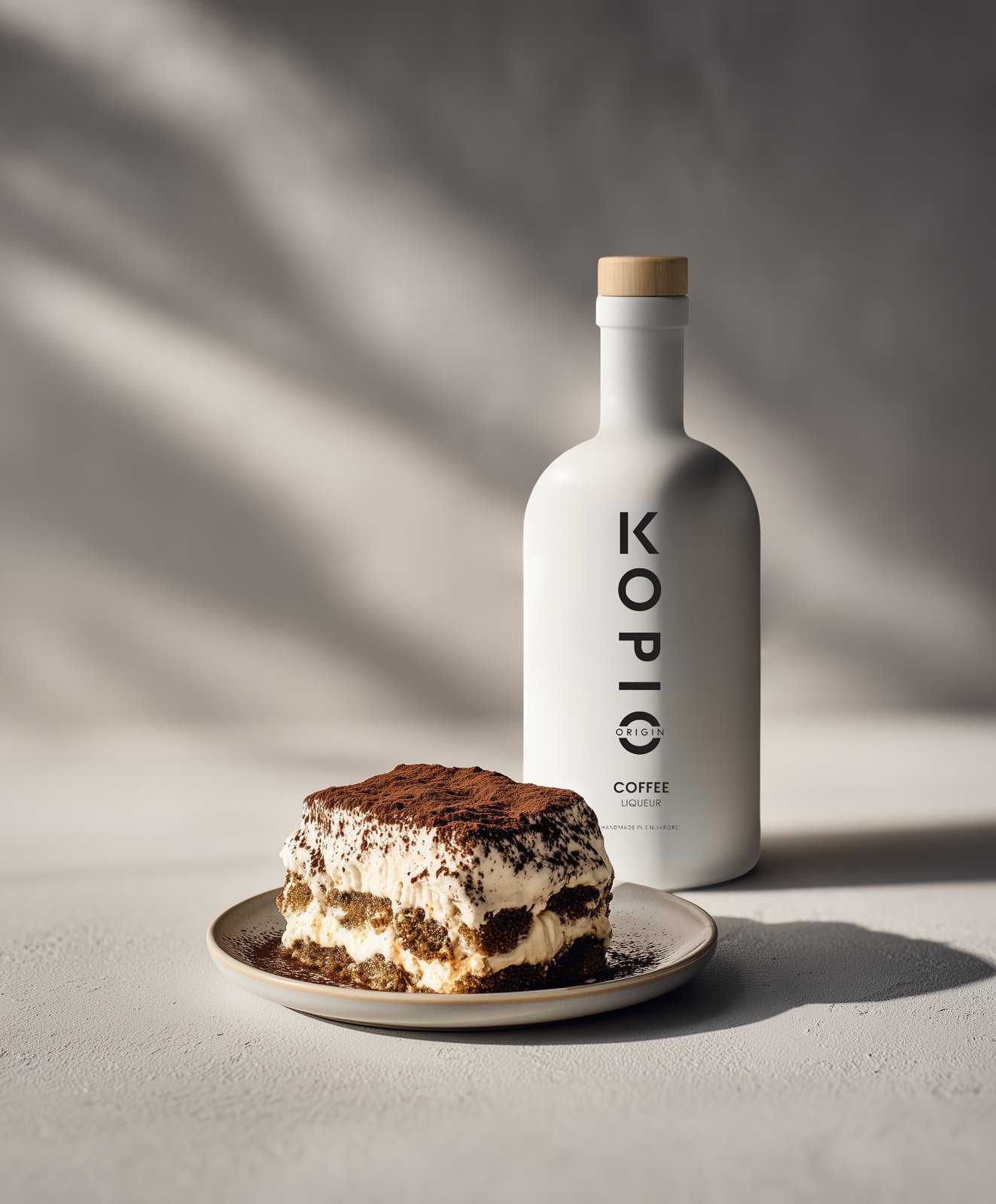
When people describe a coffee liqueur as heavy or light, they’re rarely talking about flavour alone. They’re reacting to mouthfeel — how the liquid moves, coats, and clears the palate. Two liqueurs can taste equally “coffee-forward” yet feel completely different once you sip them.
That difference comes down to a handful of design choices. Once you know what they are, the sensation makes immediate sense.
Sugar Level Is the Biggest Driver of Weight
Sugar is the primary contributor to perceived heaviness.
Higher sugar content increases viscosity. The liqueur moves more slowly across the tongue, coats the palate, and lingers longer after swallowing. This can feel indulgent and dessert-like, but it can also become tiring, especially in cocktails.
Lower sugar liqueurs feel lighter because they move faster, clear more quickly, and don’t cling as much. When sugar is carefully controlled, the liqueur feels agile rather than thin.
This is why coffee-forward liqueurs like KopiO by Studio Origin are designed with restraint. The sweetness supports coffee bitterness and body without tipping the experience into syrup.
Coffee Concentration Adds Density Without Sweetness
Coffee itself contributes to weight in a different way.
Highly concentrated coffee extracts add bitterness, solids, and depth, which can make a liqueur feel substantial even when sweetness is moderate. This is a structured heaviness — one that reads as richness rather than stickiness.
When coffee concentration is too low, producers often compensate with sugar, creating heaviness without structure. When coffee concentration is properly calibrated, the liqueur can feel full yet still light on the finish.
This balance becomes especially obvious in cocktails that involve dilution, where coffee strength determines whether the liqueur holds its shape or collapses.
Alcohol Integration Shapes Perceived Lightness
Alcohol affects mouthfeel more than most people realise.
Well-integrated alcohol lifts aroma and sharpens flavour edges, which can make a liqueur feel lighter and more energetic. Poorly integrated alcohol creates heat that lingers late, making the drink feel heavy and fatiguing.
Lower-proof doesn’t automatically mean lighter. A low-alcohol liqueur with too much sugar can feel far heavier than a higher-proof liqueur with excellent integration.
This is why liqueurs designed for real cocktail use focus on balance rather than chasing extremes — an approach reflected in how KopiO is positioned for trade and retail environments.
Texture Is Designed, Not Accidental
Texture isn’t just a by-product of ingredients. It’s a design decision.
Factors that influence texture include:
Sugar concentration
Coffee solids
Alcohol content
Filtration and blending methods
A heavier liqueur coats the palate and lingers. A lighter one clears quickly and invites another sip. Neither is inherently better — but they suit very different uses.
In high-volume cocktail service, lighter-feeling liqueurs tend to perform better because they don’t overwhelm the drink as ice melts.
Cocktails Reveal Weight Instantly
Cocktails are where the difference between heavy and light becomes impossible to ignore.
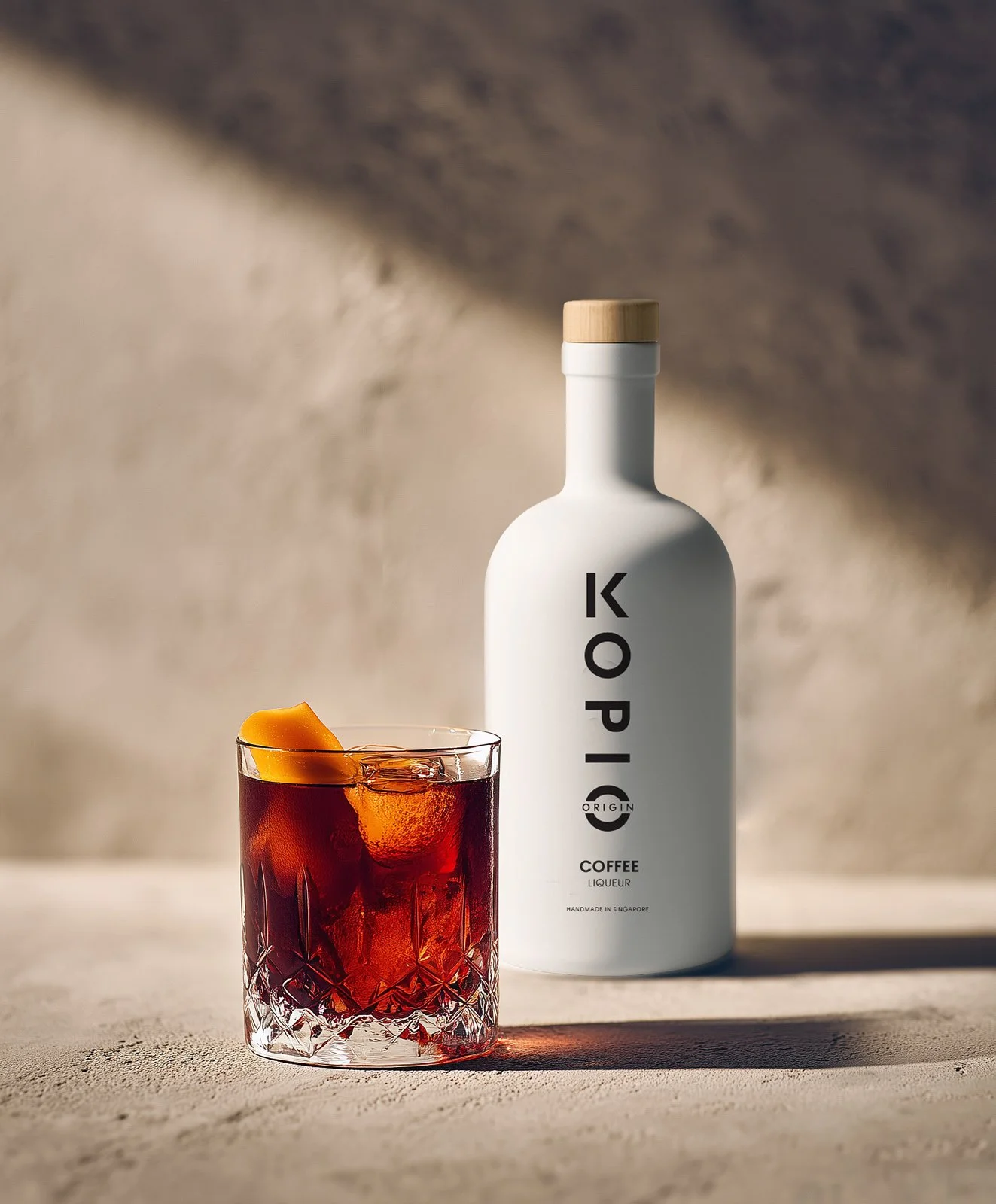
In an Espresso Martini, a heavy liqueur can make the drink feel thick and cloying as it warms. A lighter one keeps the cocktail crisp and structured from first sip to last.
Studio Origin explores this dynamic in The Espresso Martini Done Properly, where mouthfeel is treated as a core design consideration, not an afterthought.
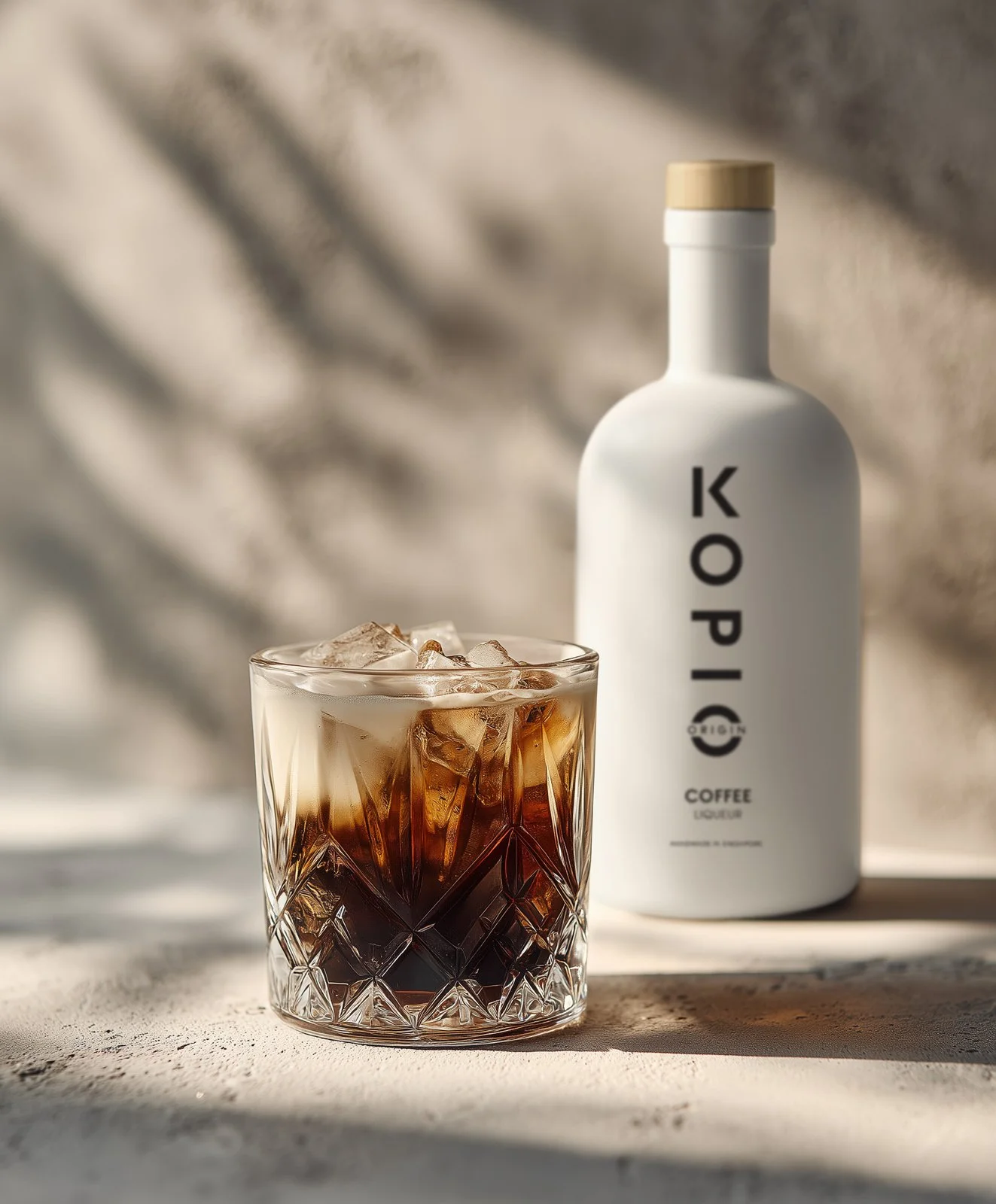
Creamy cocktails magnify this effect even further. In a White Russian-style drink, a heavy liqueur combined with dairy can quickly feel overwhelming. A more balanced one stays expressive without turning the drink into syrup. The KopiO White Russian is a clear example of how controlled weight keeps the coffee present without fatigue.
Desserts Expose Heaviness Immediately
Desserts are unforgiving when it comes to mouthfeel.
A heavy coffee liqueur can dominate a dessert, making it feel dense and overly sweet. A lighter one enhances flavour without weighing the dish down.
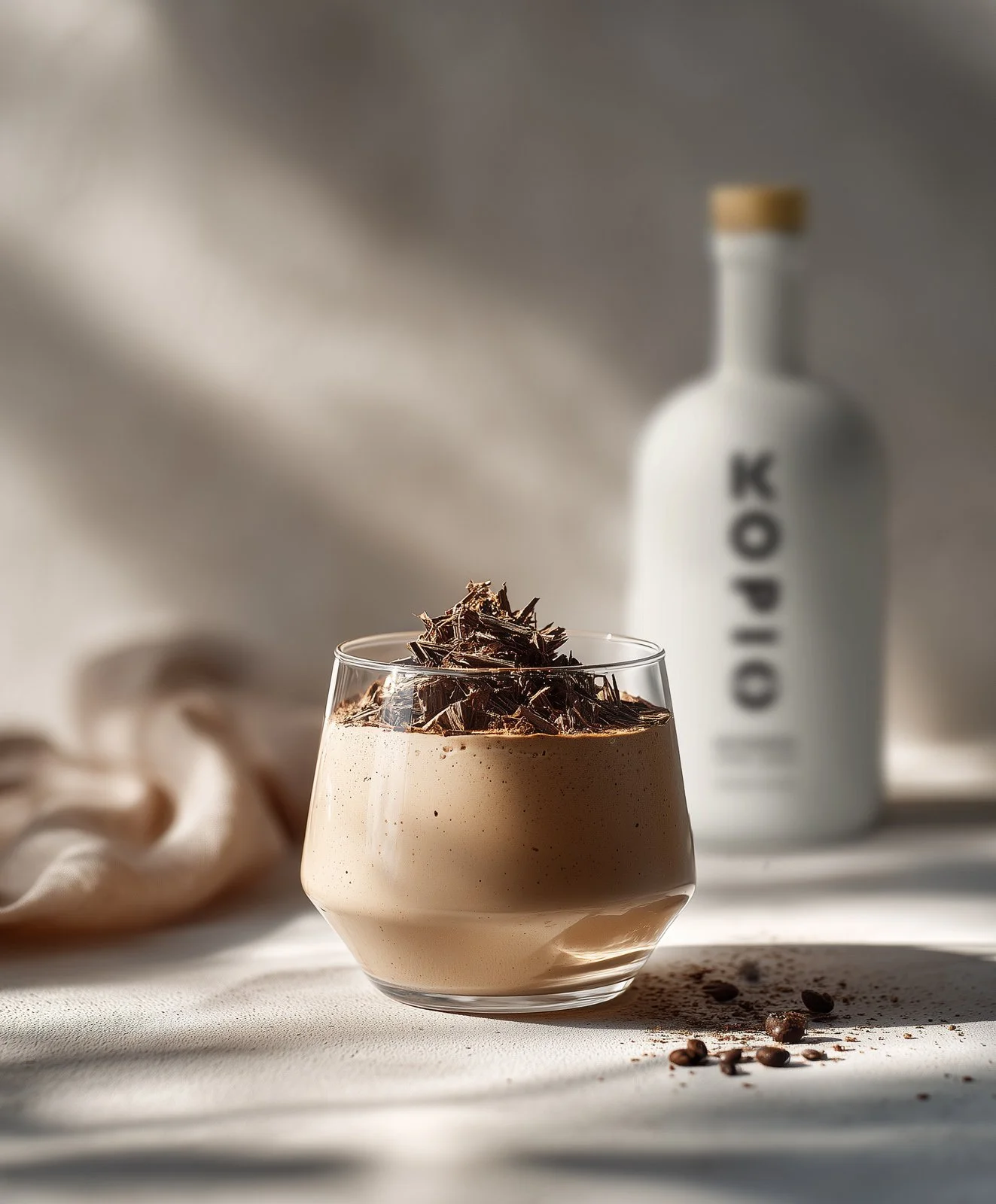
In applications like the KopiO chocolate mousse, the liqueur adds depth and aroma while allowing the dessert to remain airy and clean on the finish. That effect only works when the liqueur itself isn’t carrying unnecessary weight.
Why “Light” Often Feels More Drinkable
When people say a coffee liqueur is “easy to drink,” they’re usually responding to lightness, not low alcohol.
A lighter-feeling liqueur:
Clears the palate quickly
Encourages multiple sips
Works across more cocktails
Feels less tiring over time
This doesn’t mean it lacks flavour. It means the flavour is delivered efficiently rather than forcefully.
Learning to Tell the Difference
To understand whether a coffee liqueur is heavy or light, pay attention to what happens after the sip.
Does it cling or clear?
Does sweetness linger or fade?
Does the coffee feel crisp or muffled?
Those sensations reveal more than tasting notes ever will.
The Bigger Picture
Heaviness and lightness aren’t accidents. They’re the result of deliberate choices around sugar, coffee concentration, alcohol integration, and texture.
You can see how those choices play out across different drinks and desserts by exploring Studio Origin Stories, where coffee liqueur is consistently treated as a functional ingredient rather than a novelty.
Once you understand what makes a coffee liqueur feel heavy or light, the category becomes much easier to navigate — and the bottles that truly fit your drinking style stand out immediately.